1
Neck Rolls — 30 seconds
Gently drop your chin to your chest and slowly roll your head in a half-circle from one shoulder to the other. Keep the movement slow and controlled.
A focused joint-mobility flow to open your shoulders, hips, and spine — guiding your body gently from rest to readiness in just a few minutes. Informational content, not medical advice.
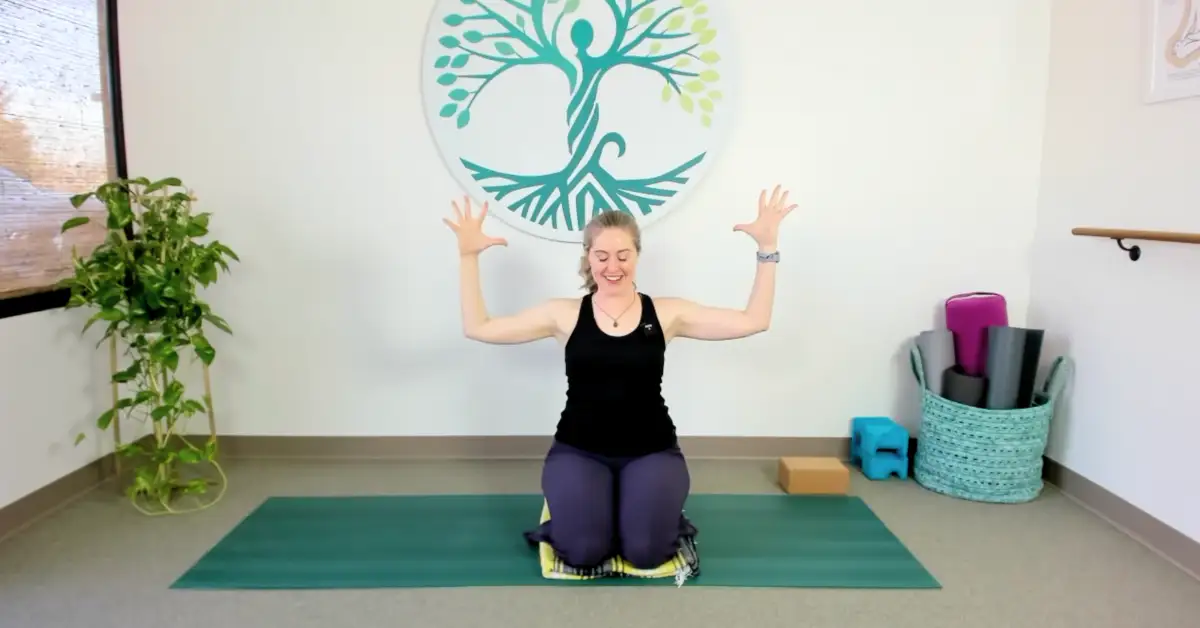
A mobility flow is a sequence of gentle, controlled movements designed to take each major joint through its comfortable range of motion. Unlike static stretching, it involves smooth, continuous movement — making it ideal as a morning practice to gradually awaken the body.
This session focuses on three key areas: the shoulders and upper back, the hips and lower body, and the spine. You will move slowly and deliberately, with no forced positions.
Work through each movement in order. Take your time — there is no rush. Hold each position briefly before transitioning.
Gently drop your chin to your chest and slowly roll your head in a half-circle from one shoulder to the other. Keep the movement slow and controlled.
Roll both shoulders backward in large, slow circles, then forward. Feel the tension in the upper back begin to release with each rotation.
Stand with feet hip-width apart. Raise one arm overhead and gently lean to the opposite side. Hold briefly, then switch. Keep hips stable and breathe steadily.
Place hands on hips and draw slow circles with your pelvis — as if tracing a large oval. Switch direction halfway through. This gently warms the hip joints and lower back.
Place hands on thighs, knees slightly bent. Alternate between rounding your back (exhale) and gently arching it (inhale). Coordinate with your breathing for a calming rhythm.
Alternating slow knee raises while standing. Bring each knee to a comfortable height. This activates the hip flexors and encourages balance awareness.
Seated or standing with one foot lifted, trace slow circles with your ankle in both directions, then repeat on the other side. Often overlooked but valuable for morning readiness.
Stand or sit comfortably. Take 4–5 slow, deep breaths — inhaling for 4 counts, exhaling for 6. Let your body settle and acknowledge the movement you have just completed.
Your joints are less lubricated when you first wake up. Begin each movement at half speed and gradually increase the range as you warm up.
Try to synchronise your breath with each movement — inhale as you open or extend, exhale as you close or release. This turns the session into a calming ritual.
Attaching your session to an existing morning cue — such as right after waking or before breakfast — makes it far easier to maintain as a regular habit.
All you need is enough room to extend your arms and take a small step in each direction. No mat is required, though you are welcome to use one.
Once you have completed this session, try the complete morning sequence for a fuller experience.
Important health notice. All materials and practices presented here are educational and informational in nature and are intended to support general wellbeing. They do not constitute medical advice, diagnosis, or treatment, and are not a substitute for consultation with a licensed healthcare professional. Physical activity carries inherent risks; results vary by individual. Consult a qualified physician before starting any new movement practice — especially if you have a medical condition, are pregnant, are recovering from injury, take prescription medication, or experience dizziness, chest pain, or shortness of breath. Stop immediately if you feel pain or discomfort. By following any routine on this Site, you do so at your own risk. See our Health, Fitness & Assumption of Risk section for full details.